
Our Research
Our central aim is to understand how local tissue environments shape B cell differentiation and antibody responses in human disease.
We study human B cell responses directly in tissues using single-cell transcriptomics, B cell receptor (BCR) sequencing, and functional immunology. Our work focuses on the mechanisms that regulate germinal centre responses, plasma cell differentiation, and tissue-adapted antibody responses in infection, inflammation, and autoimmunity.

Germinal Centre Biology
We investigate the mechanisms that regulate B cell selection and differentiation within germinal centres. These structures are critical for the generation of high-affinity antibodies and long-lived plasma cells.
Our work focuses on understanding how selection processes operate in human tissues, and how these pathways are altered in inflammatory and disease contexts.
Viral Modulation of B Cell Responses
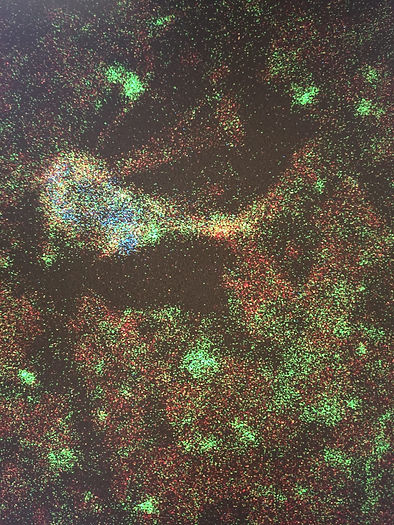
We study how Epstein–Barr virus (EBV) influences B cell biology and germinal centre dynamics. EBV infects B cells and can modulate their differentiation, survival, and activation states. Our research aims to define how viral infection alters B cell responses and contributes to the development of autoimmune disease.

Antibody Repertoire Analysis
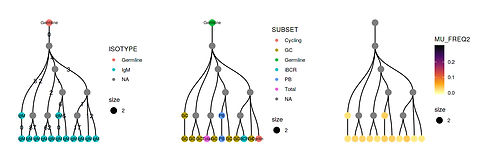
We use single-cell RNA sequencing and BCR sequencing to reconstruct B cell clonal evolution and class switching dynamics. This allows us to track how individual B cell clones expand, diversify, and differentiate over time.
By integrating repertoire data with transcriptional profiles, we can link cellular state to clonal history and functional potential.
Approach
Our work combines experimental and computational approaches, including single-cell genomics, antibody cloning, and functional assays. We study immune responses directly in human tissues to ensure clinical relevance and translational impact.
